Clinton St Locksmith Service Team
Local locksmith team
Nov 4, 2026 11 min read
If you live in GF New York — whether you're in an older walk-up off Clinton Street, a prewar building near the waterfront, or a newer apartment closer to the bridge — you've probably wrestled with a door that simply refuses to close right. It sticks, it drags, it swings back open on its own, or the latch hits the strike plate at the wrong angle and won't catch. These are not just annoyances. A door that won't latch is a door that isn't securing your home.
The good news is that most of the time, the cause is diagnosable without special tools — and knowing what to look for can save you hours of frustration. This guide walks through the most common reasons GF New York apartment and house doors fail to close or latch properly, how to tell which problem you have, and when it's time to stop guessing and call a trained locksmith to fix it correctly the first time.
## Why GF New York Doors Fail: The Three Usual Suspects
Door latching problems almost always trace back to one of three root causes: the door itself has moved, the frame around it has moved, or the hardware has worn out. In GF New York's older building stock — many structures here date back decades, with wood frames that have absorbed a century of humidity off the Hudson — seasonal movement is a major driver. Wood expands in summer heat and contracts in winter cold, so a door that latched perfectly in January may drag badly in August. That's not a defective door; that's physics working against you.
The second culprit is a shifted or settled frame. Buildings in this part of lower Manhattan settle over time, and even minor foundation shifts can knock a door frame out of plumb by a few millimeters — enough to throw the latch bolt completely off the strike plate. The third cause is worn hardware: a strike plate with a hole that's too shallow, a latch bolt that no longer springs back fully, or a mortise lock whose internal mechanism has finally given out after years of daily use. Each of these has a different fix, so accurate diagnosis matters before you reach for a screwdriver.
## How to Diagnose a GF New York Door That Won't Latch
Start with the simplest test: close the door slowly and watch exactly where the latch bolt meets the strike plate. If the bolt is hitting above or below the strike plate opening, you have an alignment problem caused by movement in the door or frame. Mark the bolt with a bit of lipstick or chalk, press the door gently against the frame, and open it — the mark on the strike plate will show you exactly how far off you are and in which direction. A gap of an eighth of an inch or less can often be corrected by enlarging the strike plate mortise with a file. More than that and you're likely looking at a hinge adjustment or a full strike plate repositioning.
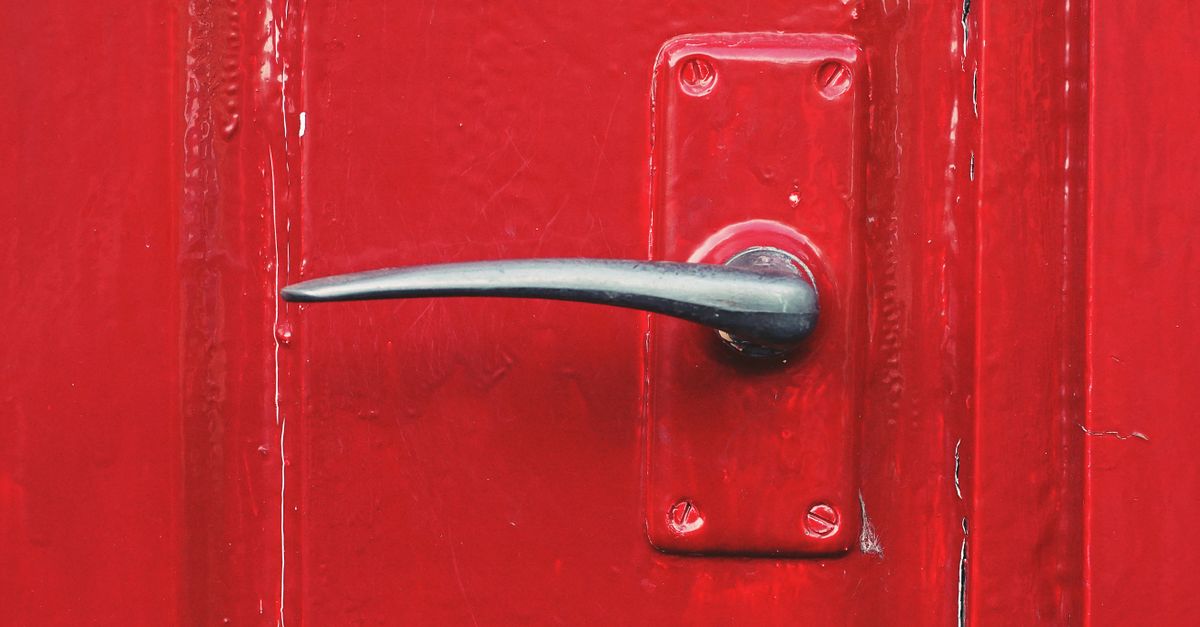
If the door closes flush but the latch bolt won't retract or extend smoothly, the problem is in the mechanism itself. A door knob lock whose latch feels stiff or gummy may just need lubrication — graphite powder works better than oil-based sprays for most lock mechanisms. But if the knob turns and nothing happens, or if a lever door handle won't lock no matter what position you try, the internal cartridge or cam is likely broken and needs replacement, not lubrication. At that point you're looking at a lock change, not a quick fix.
## Strike Plates, Mortise Locks, and Why Hardware Matters More Than You Think
The strike plate is one of the most underestimated pieces of hardware on your door. Many apartments in GF New York — especially rentals — have shallow, single-screw strike plates that were installed quickly and never upgraded. When the latch bolt engages a strike plate that's only held by half-inch screws into drywall, you don't really have a secure door even when it does latch. If you're doing any kind of strike plate work, replace those short screws with three-inch screws that reach the door frame stud. It takes five minutes and dramatically improves both latching reliability and security.
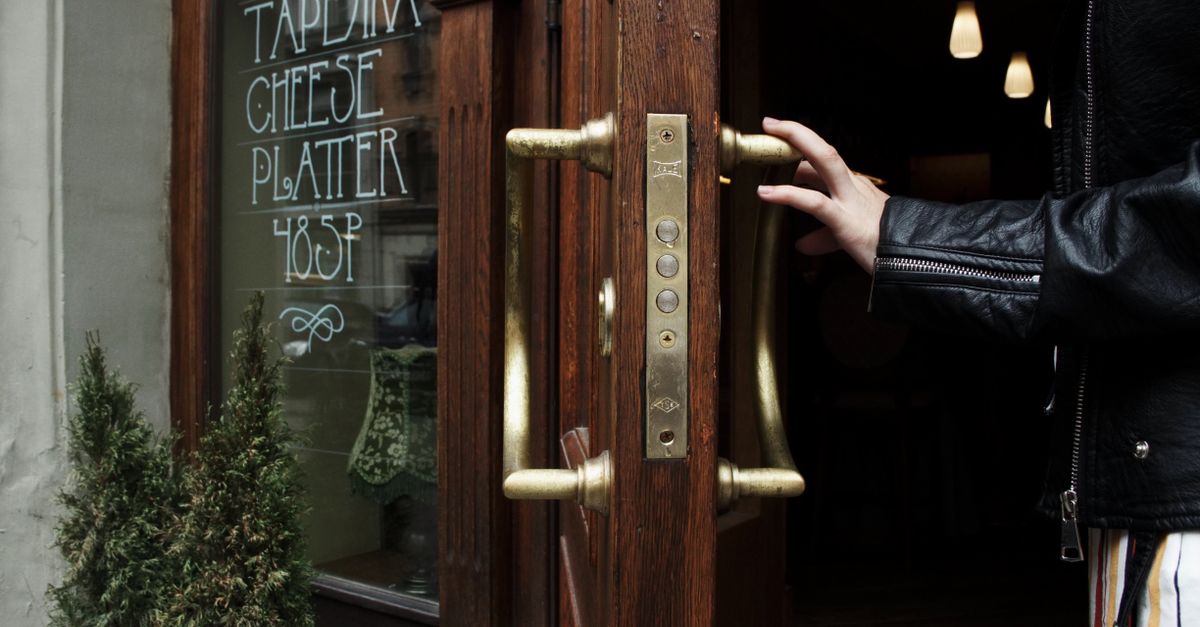
For apartments with older or commercial-style doors, a mortise lock is often the right long-term solution. Unlike a cylindrical lockset, a mortise lock sits inside a pocket cut into the door edge, giving it a larger bolt throw, a more robust latch mechanism, and far better resistance to forced entry. If your door has been retrofitted multiple times and the frame is starting to look like Swiss cheese from old hardware holes, it may be time to have an experienced locksmith assess whether a mortise lock installation makes more sense than another patch repair. For commercial properties and multi-unit buildings in GF New York, an adams rite deadlatch installation is another common upgrade — these are specifically designed for aluminum-framed glass doors common in storefronts and commercial entryways, providing positive latching without a traditional bolt.
If you're dealing with a situation where your door knob won't lock from inside — the button won't depress, the thumb-turn spins freely, or the interior mechanism has simply separated from the exterior — that's a sign the lock mechanism has failed internally. In some cases, especially in older buildings, the solution is to learn how to fix a door knob that won't lock by replacing the entire lockset rather than trying to rebuild the internals. A trained locksmith can assess whether the chassis is salvageable or whether a full swap is the smarter call. If you're a renter, notify your landlord in writing before making hardware changes — in New York, tenant-initiated lock changes without landlord notification can create legal complications.
## When to Stop DIYing and Call an Emergency Locksmith GF New York
There's a clear line between a door adjustment you can handle yourself and a problem that needs a trained set of hands. If your door won't latch at all — not just stiffly, but completely — and you can't secure your home, that's not the time to watch tutorials. That's the time to call an emergency locksmith. Clinton St Locksmith operates 24/7 across GF New York, so whether it's 2 p.m. on a Tuesday or 2 a.m. on a Saturday night, you're not waiting until business hours to get your door secured.
Other situations that warrant a professional call: you've adjusted the strike plate and the problem persists; your lever door handle won't lock and you've already replaced the hardware once; your door frame appears visibly warped or cracked; or you're in a commercial space where an adams rite deadlatch installation or a commercial-grade lock change is needed to meet building requirements. Our team works with residential tenants, homeowners, landlords, and commercial property managers throughout GF New York — from Clinton Street itself to nearby Tribeca, the Financial District, and Battery Park City. If you're not sure whether your situation qualifies, call (646) 491-8338 and describe what you're seeing — we'll tell you honestly what you need.
## Lock Changes, Rekeys, and Knowing Your Options
Sometimes a door that won't latch properly is the last straw in a longer story — maybe you've also lost a key, had a tenant move out, or inherited a door with five different keyways from previous occupants. That's the right moment to combine a latch or hardware fix with a full lock change or rekey. A rekey is faster and less expensive in parts than a full lock replacement, but it only makes sense when the existing lock mechanism is in good working order. If the hardware is worn, misaligned, or damaged, a full lock change is the right move.
If you're wondering how to change your door lock yourself, the basic process involves removing the existing lockset, measuring the backset (the distance from the door edge to the center of the knob hole — typically 2-3/8 or 2-3/4 inches), and installing a replacement that matches those dimensions. Brands like Schlage and Kwikset publish good installation guides. That said, if the door or frame has any of the alignment issues described above, installing a new lock without fixing the underlying problem will just give you a brand-new lock that also doesn't work right. Getting the frame and hardware in sync is a job where a commercial locksmith or residential locksmith's experience genuinely speeds things up. And if you're ever in a situation where you need to know how to lock your door without a door knob — say, the knob has completely failed and you're waiting on a replacement — a temporary security bar or door brace can secure an inward-swinging door overnight, but it's not a substitute for proper hardware. Call us and we can often get to you the same day to install a working replacement.
## What Affects the Cost of a Locksmith Visit in GF New York
We know cost is a real concern, especially in New York City where service calls can vary wildly. We don't quote prices in this article because the honest answer is: it depends. Factors that affect your final quote include the type of lock or hardware involved (a simple strike plate adjustment is a different scope than an adams rite deadlatch installation or a mortise lock retrofit), the time of day (after-hours and overnight calls involve different logistics), travel distance within the GF New York area, and whether replacement parts are needed on the spot. What we do commit to: we confirm an exact price with you before any work begins, so there are no surprises at the end of the job. Call (646) 491-8338 to describe your situation and get a clear, up-front quote — no commitment required just to ask.
Frequently asked questions
Why does my door latch fine in winter but stick and not close in summer?+
This is extremely common in GF New York's older wood-frame buildings and doors. Wood expands when it absorbs humidity in warmer months, causing the door slab to grow slightly — enough to drag on the frame or push the latch bolt out of alignment with the strike plate. In many cases the fix is a minor hinge adjustment or a slight plane of the door edge. If the problem has gotten severe or is happening on a metal-framed door, the frame itself may have shifted and the strike plate may need to be repositioned.
My lever door handle won't lock — the lever turns but the latch doesn't engage. Can I fix this myself?+
Sometimes. If the lever turns freely but nothing happens, the connection between the handle and the lock chassis has likely failed — either a set screw has worked loose or an internal cam has broken. Check whether the set screw on the handle collar is tight. If tightening it doesn't restore function, the internal mechanism has failed and the lockset needs to be replaced. This is a straightforward lock change for an experienced locksmith and can usually be done in under an hour.
Can a locksmith fix a door that won't latch without replacing the entire lock?+
Yes, in many cases. If the problem is strike plate alignment, hinge adjustment, or door frame movement, the existing lock hardware may be perfectly fine — it's just not meeting the frame in the right spot. A trained locksmith will diagnose whether the issue is mechanical (in the lock) or structural (in the door or frame) before recommending any parts. We'll always tell you what's needed and confirm the scope before we start work.
What is an adams rite deadlatch and do I need one for my storefront door?+
An Adams Rite deadlatch is a type of latch mechanism designed specifically for narrow-stile aluminum-framed doors — the kind you commonly see on commercial storefronts, office suites, and glass entry doors throughout GF New York. Unlike a standard cylindrical latch, it installs into the narrow edge of an aluminum door stile and provides secure, positive latching that works with the door's existing frame. If your storefront door won't latch properly or the existing hardware has failed, an adams rite deadlatch installation may be the correct fix rather than trying to retrofit residential hardware onto a commercial door frame. Call us at (646) 491-8338 and we can assess your door on-site.